2026 FBA Ethics Program Draws Legal Community to Chicago
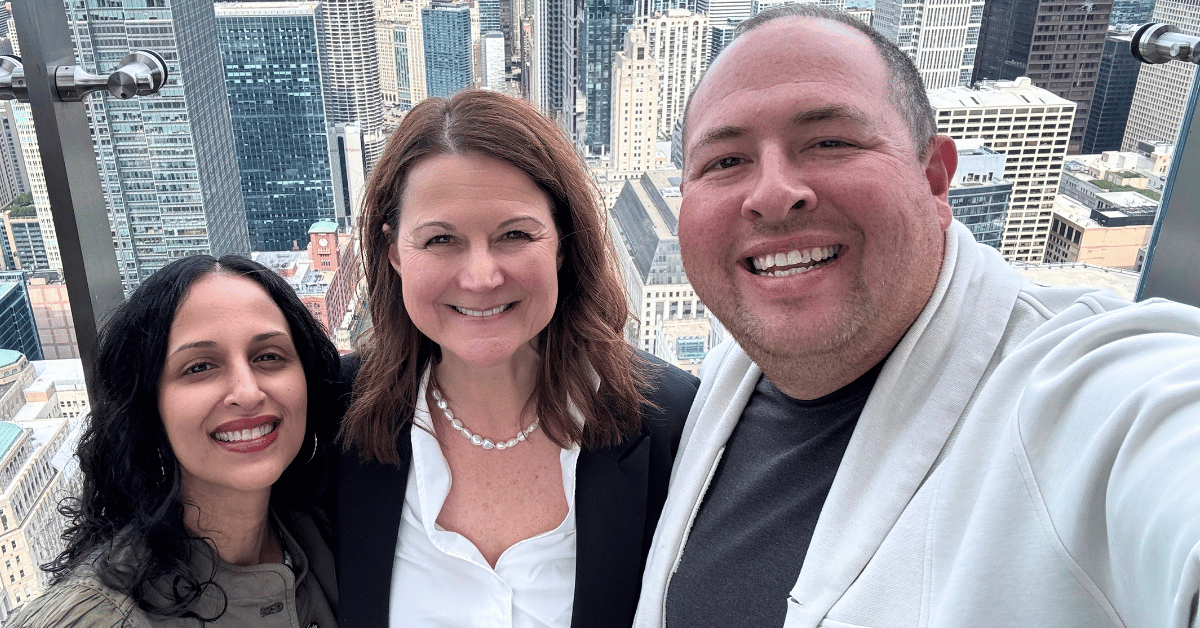
Deepa Rajkarne, Elizabeth Ekl, & Peter McNamara on the Kirkland & Ellis LLP terrace at the Ethics Program post-event reception. Photo courtesy of Elizabeth Ekl.
On June 15, 2026, the Federal Bar Association Chicago Chapter hosted its 2026 Annual Ethics Program at Kirkland & Ellis LLP in Chicago, Illinois. The event ran from 1:00 p.m. to 4:30 p.m. In-person attendance was capped at 50 participants, and the program offered 3.0 hours of Professional Responsibility CLE credit. Three expert presentations then covered distinct areas of professional responsibility, followed by a distinguished judicial panel. Together, the sessions addressed emerging trends in attorney discipline, ethical challenges in immigration practice, the scope of the mediation privilege, and the limits of advocacy in federal court.
The program also featured practical hypotheticals to help attendees apply ethical rules to real-world situations. Moreover, the format balanced expert content with open dialogue and actionable takeaways. Following the formal program, a networking reception on the 51st floor at Kirkland & Ellis gave attendees an opportunity to connect with colleagues and members of the federal bench.
Mary Andreoni Opens the 2026 FBA Ethics Program with ARDC Update
Mary Andreoni, Ethics Education Senior Counsel for the Illinois Attorney Registration and Disciplinary Commission (ARDC), opened the program with a presentation titled "2026 and Beyond: Ethics Updates and Trends." Her remarks drew directly from the ARDC's most recent annual report. She then covered three interconnected topics: shifts in the lawyer workforce, regulatory and enforcement trends, and emerging law firm structures.
On workforce demographics, Andreoni reported that Illinois saw 3,004 new attorney admittees in 2025, the largest incoming class since 2010. She also noted a 28% increase in bar-passers and a doubling of UBE/MBE score transfers. Meanwhile, client grievances are rising sharply. In Illinois, grievances increased 18% year-over-year and are up 44% since 2020. She attributed this growth to communication failures, delays, and rising client expectations.
Andreoni then addressed key misconduct patterns. Notably, fraud, deception, and trust-fund conversion accounted for about 70% of formal disciplinary complaints. She further flagged growing concerns around lawyer impairment, judicial incivility, and the misuse of AI tools in legal practice.
She also examined Alternative Business Structures (ABSs) and Management Services Organizations (MSOs). Both models are generating significant regulatory debate in Illinois and nationally. Andreoni referenced Illinois SB 3812/HB 5487, which proposes fee-sharing restrictions with non-attorney-owned entities. Her session gave attendees a timely look at how structural changes in the legal market intersect with professional responsibility.
Ethical Issues in Immigration Practice and Mediation Privilege
The second and third presentations each addressed a distinct area of professional responsibility.
Nicole Hallett, Clinical Professor of Law at the University of Chicago Law School and Director of the Immigrants' Rights Clinic, presented on ethical challenges in immigration practice. Her session used a hypothetical format to walk attendees through real ethical dilemmas. Topics included scope of representation, attorney competence in a changing policy environment, and duty of candor in immigration court. She also discussed U.S. v. Hansen, 599 U.S. 762 (2023), and its implications for attorneys advising clients on immigration decisions. Additionally, she addressed Matter of Lozada, 19 I&N Dec. 637 (BIA 1988), and the requirements for ineffective assistance of counsel claims in immigration proceedings. Her session was particularly timely given ongoing shifts in federal immigration policy and enforcement.
Neil B. Posner, Principal at Much Shelist, P.C., then addressed the mediation privilege from an ethics perspective. His session examined whether the privilege is truly eroding or simply subject to the scrutiny applied to all evidentiary privileges. Posner reviewed key case law, including ACQIS, LLC v. EMC Corp., Sheldone v. Pennsylvania Turnpike Commission, and Cassel v. Superior Court. He concluded that the privilege remains intact for communications directly tied to formal mediation. However, post-mediation communications lacking a clear nexus to the mediator are generally not protected. Practitioners, he advised, must carefully analyze applicable state law before asserting the privilege.
2026 FBA Ethics Program Closes with Judicial Panel Discussion
The formal program closed with a panel titled "Respecting the Rule of Law and the Limits of Advocacy." The panel featured Hon. Virginia M. Kendall, Chief U.S. District Judge for the Northern District of Illinois; Hon. Franklin U. Valderrama, U.S. District Judge for the Northern District of Illinois; Donald R. Lorenzen, former Senior Litigation Counsel at the U.S. Department of Justice; and Robert K. Neiman, Principal at Much Shelist, P.C. The panel was moderated by Hon. Geraldine Soat Brown (Ret.), former U.S. Magistrate Judge for the Northern District of Illinois and current JAMS mediator.
The discussion addressed four core obligations. First, panelists examined the foundation for legitimate judicial decisions and the attorney's role in fair, impartial processes. Second, they addressed the duty to conduct a reasonable factual inquiry before accepting or continuing a representation, citing Model Rules 1.16(a), 1.2(d), 1.3, and 1.1, as well as ABA Formal Opinion 513. Third, the group covered the duty to advance only meritorious claims under Model Rule 3.1 and Federal Rule of Civil Procedure 11. Fourth, panelists addressed the duty of candor to the tribunal under Model Rule 3.3.
Throughout the discussion, panelists stressed that courts rely heavily on attorneys' representations. They also noted that greater candor reduces the risk of sanctions and ethical violations. Panelists further offered best practices for handling adverse authority and recognizing ethical red flags in federal court practice.
Continuing Legal Education for Chicago's Federal Bar Community
The 2026 Annual Ethics Program brought a full audience to Kirkland & Ellis LLP. The program covered a broad range of professional responsibility topics, spanning ARDC enforcement trends, immigration ethics, the mediation privilege, and judicial expectations for candor in federal court. Together, the sessions offered one of the more comprehensive legal ethics events of the year for attorneys practicing in the federal system. Attendees were eligible to earn 3.0 hours of Professional Responsibility CLE credit. A reception on the 51st floor then closed the evening, giving attendees a final opportunity to connect with colleagues and members of the bench.
The FBA Chicago Chapter continues to develop high-quality programming for the federal legal community. Events like the Annual Ethics Program reflect the Chapter's commitment to fostering meaningful dialogue between the bench and the bar. To stay informed about upcoming seminars, chambers luncheons, and other professional development opportunities, explore the FBA Chicago Chapter's upcoming events.