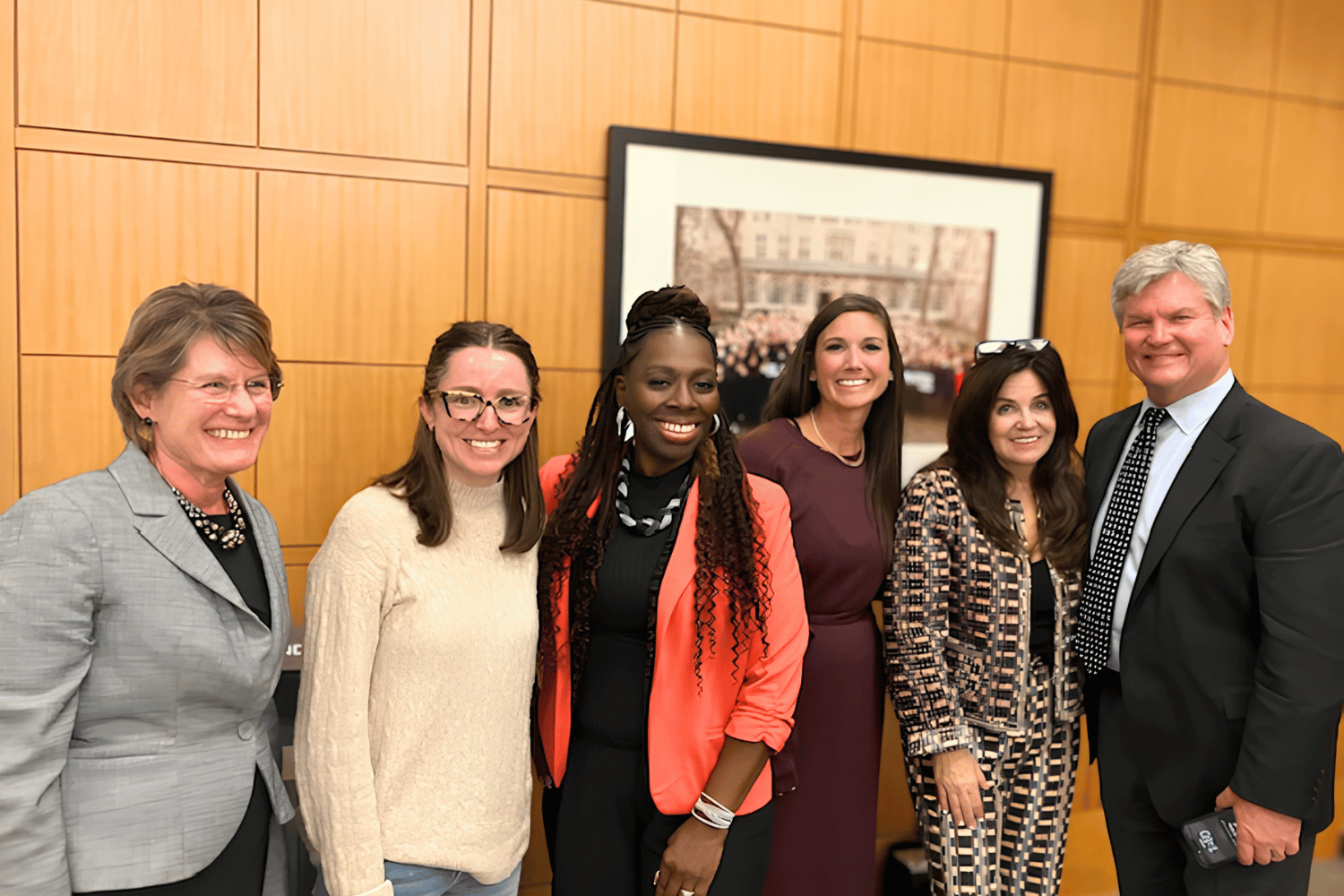
Practitioners, law students, and neutrals gathered at Northwestern Pritzker School of Law on Friday, November 6, 2026, for an ADR Roundtable (Alternative Dispute Resolution) exploring the value of alternative dispute resolution and how newer attorneys can get involved.
The Federal Bar Association Chicago Chapter co-hosted the hybrid program with the FBA ADR Section and Northwestern’s FBA Student Chapter. Wendy Jeter, J.D., Treasurer and Secretary of the FBA ADR Section, moderated.
The panel brought together four professionals with perspectives from private practice, legal education, and court administration:
Roger W. Slead, a shareholder at Horn Aylward & Bandy, LLC in Kansas City
Lynn P. Cohn, co-director of Northwestern Pritzker’s Center on Negotiation, Mediation, and Restorative Justice
Laurel Stevenson, director of the Mediation and Assessment Program (MAP) for the U.S. District Court for the Western District of Missouri
N. Edward “Ed” Timken, founder of Timken Dispute Resolution, LLC
Their discussion focused on what effective ADR practice requires, from dedicated training and early engagement to practical ways for newer attorneys to gain experience.
Experienced ADR Roundtable Panelists Make the Case for Early Mediation
Mediation offers clients a chance to resolve a dispute before litigation consumes more time, money, and goodwill. But attorneys often wait until trial is approaching to give it serious attention. By then, costs have mounted, and positions have hardened.
The panel urged attorneys to start earlier, when there is still room to explore creative solutions. Beyond reducing costs and shortening timelines, mediation can protect confidential information and give parties more say in the outcome than a verdict would.
The panelists drew on years of experience in both litigation and ADR. Before becoming MAP Director, Stevenson tried more than 80 jury trials to verdict; she has since mediated more than 1,000 cases. Cohn has served as an arbitrator or mediator in more than 3,000 matters. Slead has spent nearly 40 years defending professional liability, employment, and construction cases and serves on MAP’s Category 1 mediator list.
The program materials echoed their advice. Federal district courts across the country operate formal ADR programs, and some local rules direct parties to consider mediation or a settlement conference early in every case. The panel encouraged attorneys to approach those opportunities as more than another requirement to satisfy before trial.
Effective Negotiation and Mediation Training Diversifies Attorney Skillset
While courtroom experience matters, it does not teach everything an attorney needs at the negotiating table. Persuading a judge or jury calls for different skills than helping parties identify their interests, listen to one another, and work toward an agreement. Effective negotiation and mediation require deliberate training and careful client counseling.
That training has taken different forms for the panelists. Cohn has developed and taught courses in negotiation, mediation, mediation advocacy, and problem solving. Slead began studying arbitration and mediation as a teaching assistant under Professor Stephen B. Goldberg, a pioneer in the field, and later completed the UMKC Law Mediation Training Workshop. Timken earned an LL.M. in International Dispute Resolution from Fordham University School of Law and writes frequently about mediation advocacy and ADR ethics.
Attendees left with resources to continue that work, including the Model Standards of Conduct for Mediators, ABA Formal Opinions 518 and 525, and references to the Federal Judicial Center’s Competencies for Federal Court Mediators.
Timken also contributed a practice guide examining mediator liability and indemnity gaps in federal ADR. Alongside those issues, the guide addressed AI-related risks, including confidentiality breaches and drafting errors. A closing checklist covered pre-session agreements, liability policy review, and secure AI practices.
Finding a Way into ADR Practice
For law students and newer attorneys, the discussion turned to a practical question: Where do you start?
The panel discussed the Settlement Assistance Program as one way to gain hands-on experience. Court-annexed mediation programs offer another route. Stevenson has led MAP in the Western District of Missouri for more than six years, and Slead serves on its Category 1 mediator list. Programs like MAP provide a structured path into court-referred mediation.
Writing can also help newcomers participate in the field. The FBA ADR Section’s biannual newsletter, The Resolver, welcomes contributions from experienced ADR professionals and those just getting started, including collaborative articles. Topics of interest include fellowship, mentorship, and shadowing opportunities for students and less seasoned professionals. Edited by Stevenson, the newsletter received an Outstanding Newsletter Award in September 2026.
Closer to home, Northwestern’s Center on Negotiation, Mediation, and Restorative Justice and Chicago’s Center for Conflict Resolution offer resources for further learning. Attorneys interested in joining an FBA Section can contact the Chicago Chapter.
Across the discussion, the panel returned to two ideas:
Consider ADR before litigation narrows the options.
Invest in the skills it requires.
For newer attorneys, programs, mentorship, Section involvement, and writing offer ways to begin building that experience now.
The Federal Bar Association Chicago Chapter thanks panelists Roger W. Slead, Lynn P. Cohn, Laurel Stevenson, and N. Edward Timken, and moderator Wendy Jeter. Furthermore, the Chapter thanks the FBA ADR Section for sponsoring lunch, and Northwestern Pritzker School of Law and its FBA Student Chapter for hosting.
For further continuing legal education and networking opportunities within the FBA Chicago Chapter, please explore our upcoming events.