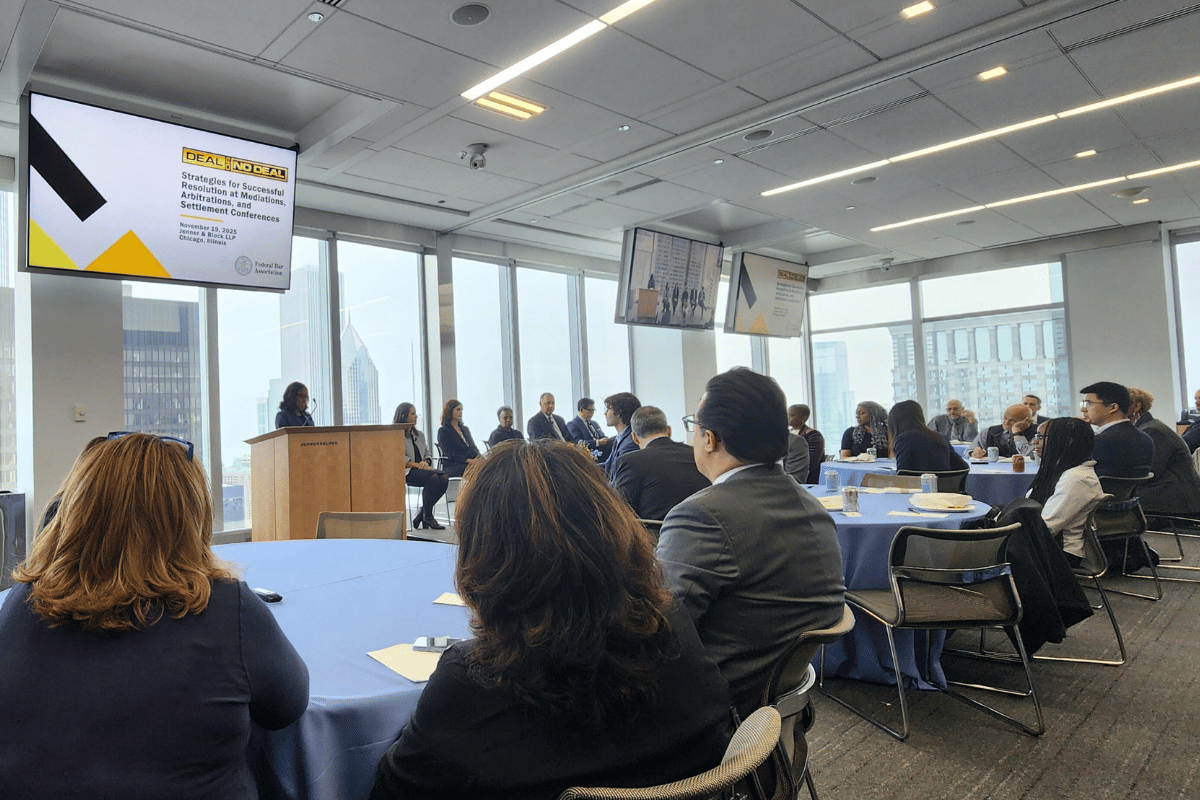
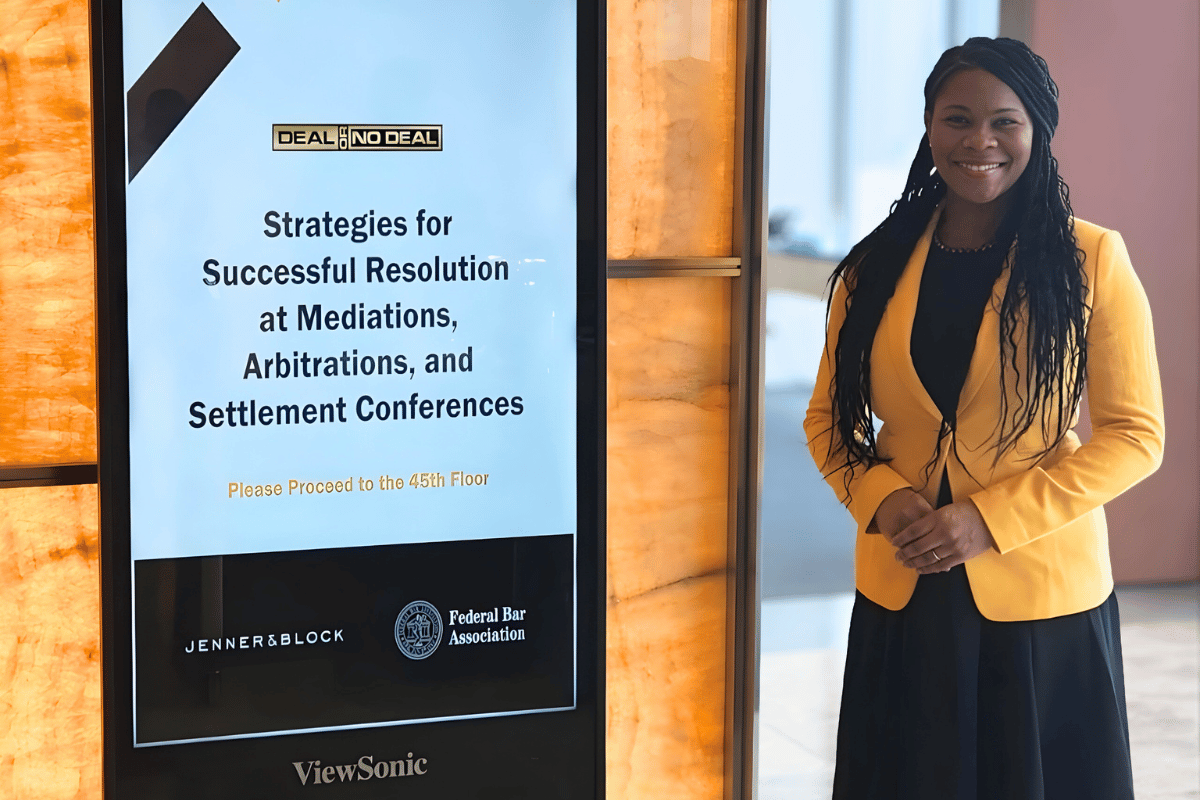
The Federal Bar Association Chicago Chapter hosted an in-depth panel covering alternative dispute resolution techniques, including mediation, arbitration, and settlement conferences. Held on Wednesday, November 19, 2025, its “Deal or No Deal? Strategies for Successful Resolution at Mediations, Arbitrations & Settlement Conferences” CLE event brought in 80 Chicagoland legal professionals. Hosted by Jenner & Block LLP (353 N. Clark Street, Chicago), the discussion centered on practical decision-making for attorneys in federal practice.
The esteemed panelists included former Chicago Mayor Lori E. Lightfoot, U.S. District Court Judge John F. Kness, U.S. Magistrate Judge Young B. Kim, Cassie Lively (AAA), and Elizabeth Barton (Board of Education of the City of Chicago). Additionally, Precious Jacobs-Perry served as moderator.
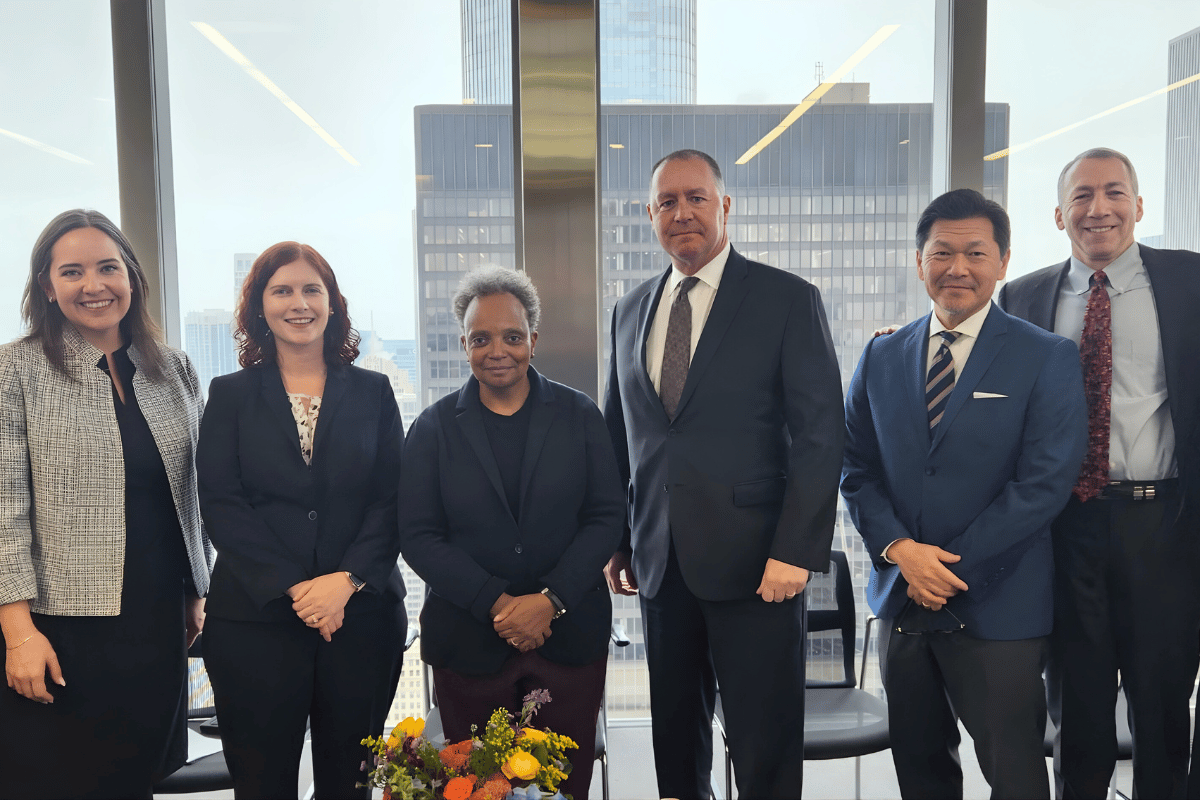
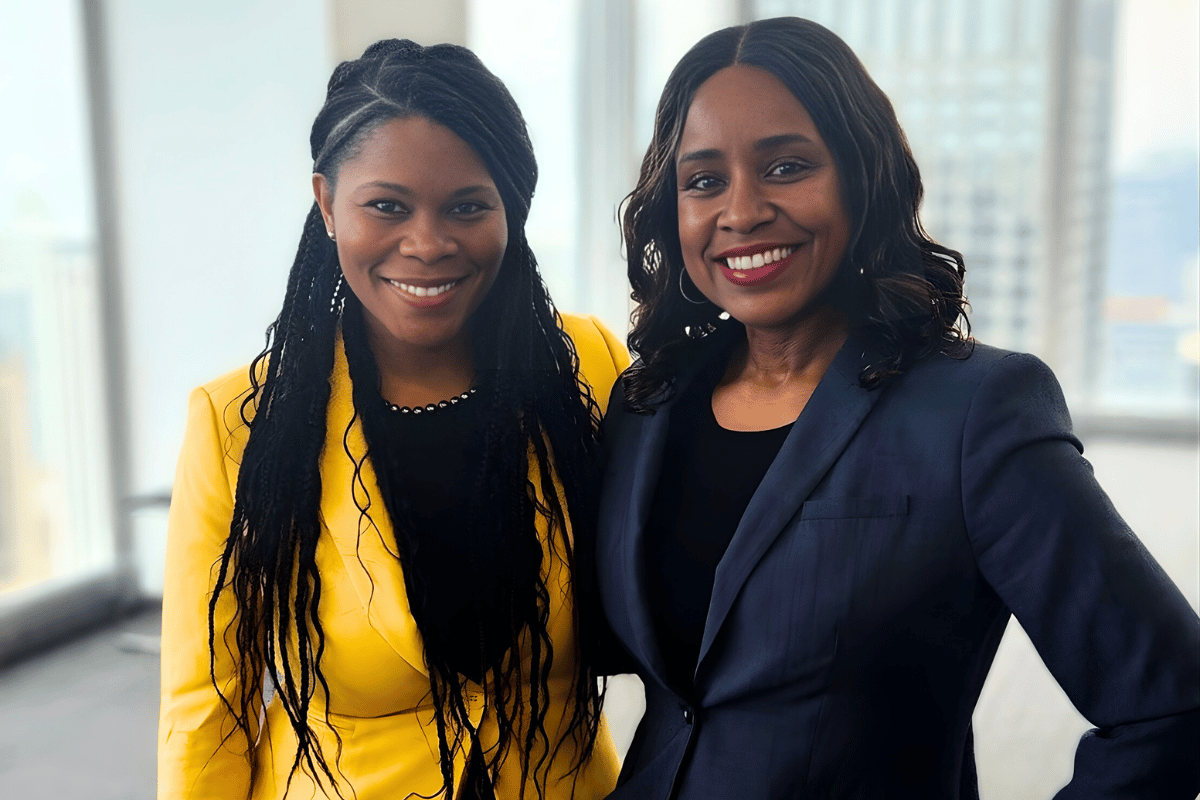
Alternative Dispute Resolution Insights From A Cross-Section Of Leaders
Hon. Sunil R. Harjani, President of the FBA Chicago Chapter, welcomed guests and underscored the Chapter’s role in convening federal practitioners and supporting professional development. He also highlighted upcoming programming, including the Chapter’s December 16 holiday party and toy drive benefiting the children of The Ark of St. Sabina.
During the November panel, the discussion reinforced that effective alternative dispute resolution (ADR) rarely follows a one-size-fits-all approach. Instead, counsel must match the forum to the dispute, client objectives, and litigation posture—then execute with discipline.
Panelists highlighted signals that mediation may be particularly effective under certain circumstances. This includes moments when clients benefit from a candid reality check on risk, when parties are concerned about reputational impact, and when creative, non-monetary outcomes could resolve key business issues. Furthermore, the group emphasized that a strong ADR strategy often involves aligning decision-makers early and anticipating where the “real” obstacles to resolution lie.
Notably, the panelists also emphasized thorough preparation as a consistent theme. To improve credibility and negotiation momentum, the panelists encouraged federal practitioners to have a clear settlement authority, a tested damages/risk assessment, and realistic non-monetary options.

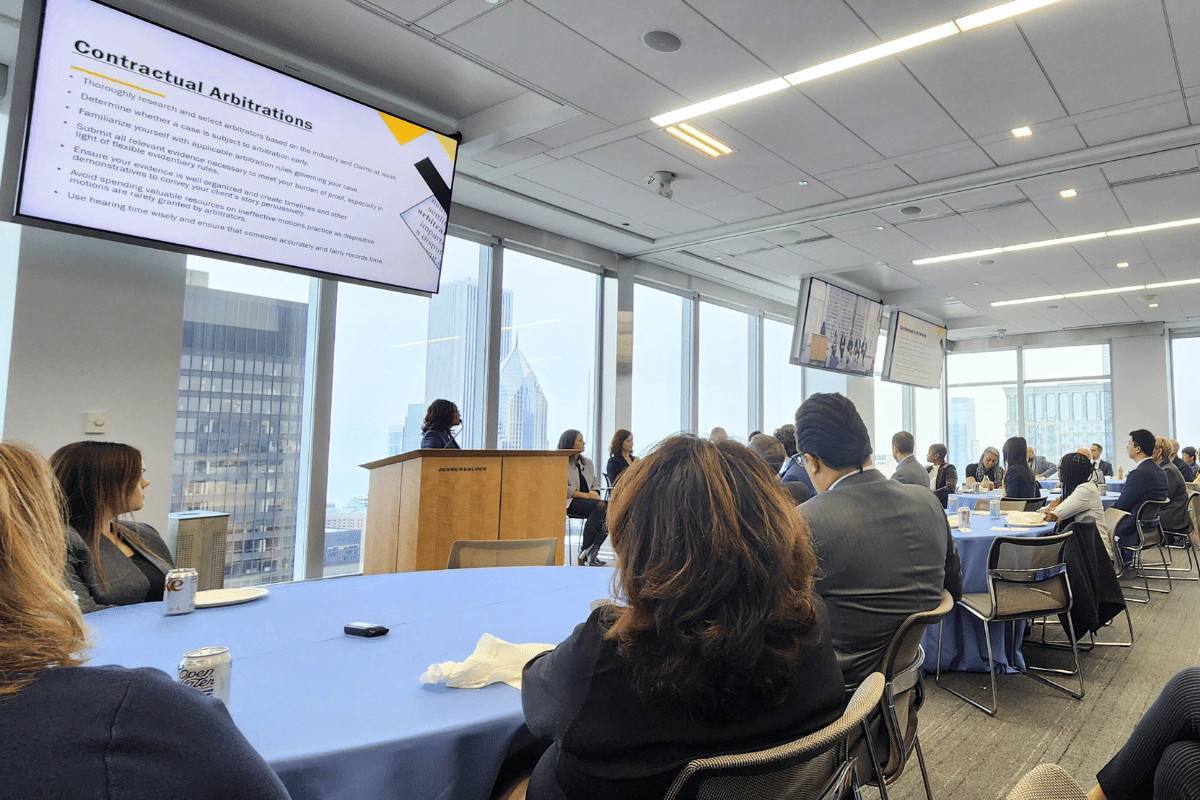
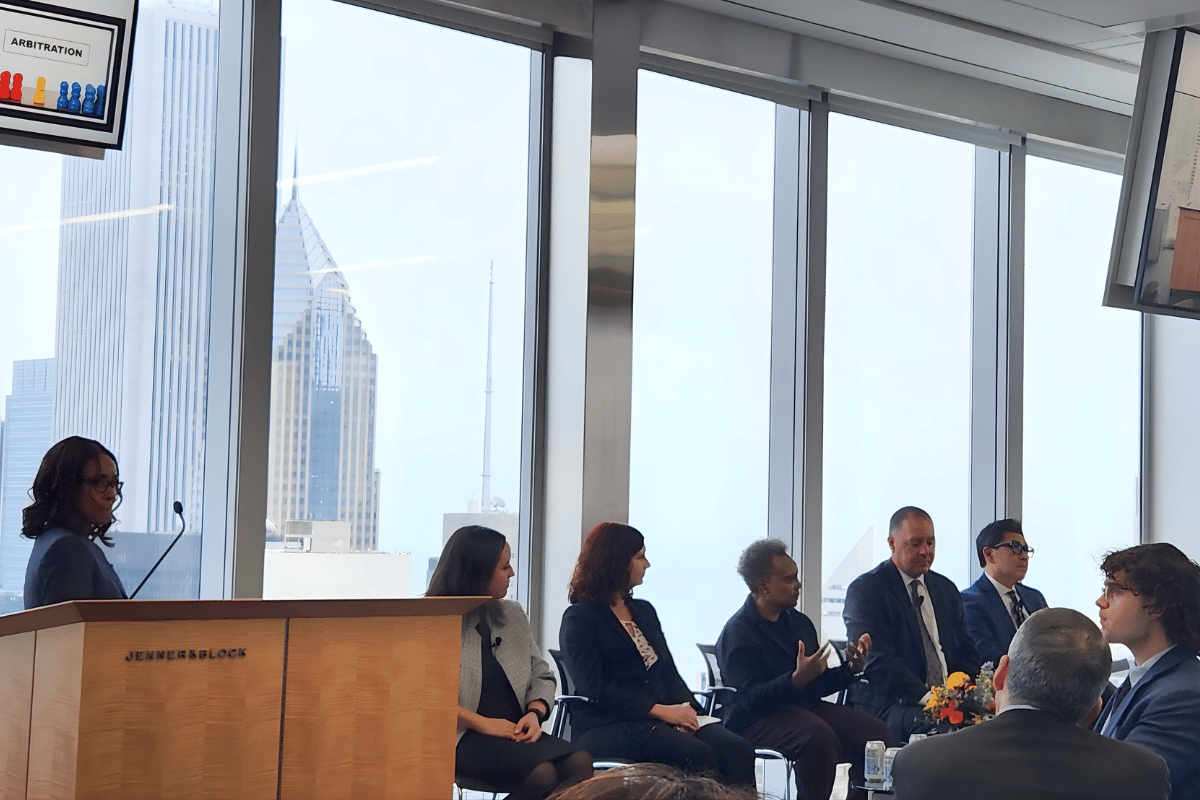
Practical Resolution Strategies for Mediation And Settlement Conferences
When the conversation turned to mediation, panelists framed it as more than a midpoint checkpoint. Mediation can be a strategic forum to refine themes, communicate risk, and test whether a case is truly ready to resolve without the time and expense of trial preparation.
Moreover, the panel emphasized coming prepared with both monetary parameters and credible non-monetary solutions. Depending on the dispute, that can include confidentiality terms, timing and payment structures, operational commitments, or other tailored provisions that litigation may not deliver as cleanly. They also highlighted the value of selecting the right mediator and using persuasive written submissions.
The program also addressed settlement conferences in federal court as a distinct resolution tool. Panelists noted that settlement conferences can be cost-effective, and they may offer litigants a valuable opportunity to gauge how legal theories and arguments might be viewed by the court.
At the same time, the discussion acknowledged practical tradeoffs. Federal settlement conferences may operate under tighter time constraints, and in some instances, magistrate judges may not be able to provide post-conference negotiation support upon request. As a takeaway, counsel should treat settlement conferences as highly structured opportunities that reward preparation, clarity, and efficient negotiation planning.
Arbitration Planning And Advocacy: Setting The Case Up For Success
Closing out the event, the panelists honed in on arbitration lessons, starting with the front-end work that often determines how smoothly a dispute proceeds. Panelists emphasized drafting comprehensive arbitration clauses and naming a provider to reduce uncertainty once a conflict arises. From an advocacy standpoint, the discussion stressed that arbitrators may not begin with deep familiarity with the underlying dispute. That makes it essential for counsel to clearly educate the panel on key facts, critical evidence, and the structure of the legal arguments.
The interactive Q&A reflected strong audience engagement, with thoughtful questions from attendees, including Michael Rothstein and Shannon Cervantes. The closing remarks captured the event’s central message:
Strong outcomes are rarely accidental; they come from strategic preparation and clear client counseling at the moment a deal is on the table.
Finally, the Chapter recognized those who made the program possible, including the Corporation and Association Counsel Committee (Lisa M. Kpor, Tony Garcia, Kelly Greening, Melissa Hirst, Janelle Anderson, and Peter McNamara) and ACC member Michael Booden for organizing the luncheon. Additional thanks were extended to check-in volunteer and FBA President-Elect Kristine Argentine, and CLE Committee members John Moynihan and Jordan Matthews.

Turning Alternative Dispute Resolution Insights into Action
The Federal Bar Association Chicago Chapter’s “Deal or No Deal” program offered a practical framework for navigating alternative dispute resolution with confidence. Across mediation, settlement conferences, and arbitration, the panel emphasized disciplined preparation, thoughtful forum selection, and client-centered strategy. For litigators and in-house counsel, the program’s recurring theme laid out a groundwork for success:
Define what success looks like early
Select the resolution path most likely to achieve it
Show up ready to negotiate with both numbers and solutions.
This approach improves efficiency, reduces uncertainty, and helps clients make clear “deal or no deal” decisions grounded in risk and reality. To stay connected, explore the Federal Bar Association Chicago Chapter’s upcoming events.